The event described below is part of a series of initiatives of the Anti-Racism Taskforce of the Northern Illinois Conference of the United Methodist Church. See below for details.
The color of concert music is white. Its gender: male. So goes the popular perception. To start a conversation on t.....continued>
Below is a 3:30-minute video of a small but momentous occasion. My son Aaron—a wonderful musician and talented teacher and conductor—leading the Gage Middle School orchestra, Riverside, California. He’s been teaching there for 20 years and thousands of students. When he first got to Ri.....continued>
We celebrate the Church’s “birth” on Pentecost Sunday, the day the promised Holy Spirit arrived. This year we celebrated on May 20th, a Sunday where at my church—one of the most diverse in America—its large Filipino group took charge of the service. The VIDEO below sh.....continued>
This is the first of 16 short excerpts from my radio series Voices and Freedoms: A History of Jazz. Based on my book of the same name, the series (and book) were produced at the University of Virginia in the nation’s Bicentennial Year. The show, syndicated by the Intercollegiate Broadcasting.....continued>
May 2020 Update: Another “I-Can’t-Breathe” incident. I could not watch the video of the police killing of George Floyd in Minneapolis on May 26, 2020. But I heard it while my wife described to me what she was seeing: a police man with his knee on the neck of an already-subdued bl.....continued>
“CBS” (COOL BLACK SICKNESS) a song DAN GUZMAN co-wrote and performs with Brad Hoskins. Fat Cats, Moses in the desert with the Great I Am, bleeding seas, and things tumbling from the sky. Apocalyptic dread. Cool grooves. It not only sounds good—it&#.....continued>
Update: IN APRIL 2018, EMMANUEL HOUSE MERGED WITH LONG-TIME PARTNER ORGANIZATION THE JOSEPH CORPORATION TO BECOME The Neighbor Project. THIS INCREASED THE NUMBER OF FAMILIES SERVED FROM AROUND 25 AT THE TIME OF SENATOR DURBIN’S VISIT TO NOW, IN 2020, A NUMBER APPROACHING 3000. WATCH A VIDEO.....continued>
An Adobe commercial where human relationships still remain central.
This is a rather light-hearted commentary for such a serious subject. In fact, it is accompanied by a Video below not of the doomsayers of the past few days, but of three of my favorite AI commercials put out by Adobe Acrobat. I just enjoy these, and I’m no shill for Adobe. I think I have the Foxit pdf reader on my computer, not Adobe. The Video, though, touches on one of the major fault lines of the AI debate. When AI is seen as an assistant to humans, all seems well, but the assistance can all too easily take over the human, and for the last several days that take-over has come to mean not just losing what we’ve seen as central human skills and qualities, not just losing jobs, but humanity being literally wiped out by AI gone rogue or AI used to make and direct things—like biological agents—that could kill off humans entirely. In a recent concert, comedian Jerry Seinfeld said, “Well, we just started with plain old human intelligence and that’s not worked out so well, so now we’re trying out Artificial Intelligence to see how that goes.”
The three videos I’ve combined into one below end with AI as clearly in the assistant mode, with human relationships still commanding center stage in the last of the three. The other two, though, I don’t know, especially in the second video where we’re at least on the verge of a more total takeover, where the humans are in stupefied wonder at how much better AI makes their work than they ever could. Researcher Jacob Coxon has warned that AI could wipe us out in a decade, and Elon Musk and Sam Altman (OpenAI’s CEO) agree with Anthropic CEO Dario Amodei’s call to slow AI development. The talk over the next few months will be on creating safeguards, rails, to more robustly contain and direct the development and deployment of AI. Much of this will involve complex technical matters of the utmost importance. We will be talking, too, of having to go world-wide with this effort—especially forming an understanding with China. I hope we will also continue talking about ethics, about how important it will remain to integrate morality and ethics into our technology—or the other way around, as it probably should always have been. An ethical upgrade should probably be the thing we integrate our technological upgrades in to.
In a previous article, “Whales and An Ethic for the Age of AI,” I suggest ways we can begin considering an ethical upgrade. It all hinges on staying embedded in the real, as opposed to the virtual world. Lately I’ve been reading and re-reading Ada Limon’s poem “In Praise of Mystery,” written for NASA’s Europa Clipper, launched towards Jupiter’s second moon in 2024. The poem is engraved in her own handwriting on the space craft’s vault plate. “Still,” she writes, “there are mysteries below our sky: / the whale song, the songbird singing / its call in the bough of a wind-shaken tree.” It’s not the darkness of space that unites us “…but / the offering of water, each drop of rain, / each rivulet, each pulse, each vein” because “…we, too, are made / of water, of vast and beckoning seas.” Stay in touch with such things and it might possibly work out.
This morning brought an email from Richard Tomkins, general manager of Vincent House, a residential hotel in the Notting Hill neighborhood of London. I stayed there in the Fall and early Winter of 2000 while teaching in a study abroad program at Imperial College. Staying at Vincent House and making friends there was one of the high, high highlights of my life. In late September of this year we planned to stop off in London after a trip to Austria and had hoped to stay at Vincent House. But Mr. Tomkins’ email this morning foreclosed that possibility. He wrote:
“Dear Dr Guzman,
What a great surprise to hear from you and thank you so much for the photograph.
I am still involved with Vincent House but generally work from home now, having moved away about four years ago.
I’m sure you have heard by now from our reception team, that we have sold Vincent House and are in the process of closing the business.
It is a very sad time for all of us, but life moves on as they say, and we now look forward to the next chapter.
Thank you again for the trip down memory lane. It’s great to remember all the wonderful times I had at Vincent House and the amazing people I met. I consider myself very lucky.
I hope all is well with you and, who knows, maybe our paths will cross again someday unexpectedly.
Best Wishes and take care. — Richard”
The picture he refers to is this:
I took this in December 2000 in the middle of Christmas celebrations. In the top center is Marietta, a Filipina and head of the kitchen. She has her arms around Richard Tomkins and his wife. They were expecting their first child.
My dining room table was #17, with my regular mates Rochfort Young and Peter Knowles. Table #17 turned out to be the notorious social hub of breakfasts and dinners at Vincent House. I wrote a series of sketches of my time in London called “Remembering London,” which I hope you will read to catch a fuller glimpse of the life I shared at Vincent House.
No less a traveler than PBS’s Rick Steves has also written about Vincent House’s closing:
“This may be of interest to some old London hands…
For many years I have stayed at Vincent House London Residence when in London— either for a few nights or on occasion for 6 weeks…It started as a Residential Club in the WW2 era,and ended up as a combination long term residence (13+ weeks) , mid-term residence (5-13 weeks) and hotel. Very much like an upscale university residence hall for real grown-ups.
Perfect location, immaculate but simple accommodation, excellent breakfast (and dinner if you were a “resident” ) and the presiding cat, Gigi. A common area/lounge and a fabulous garden, perfect for summer evenings. And very good for solo travelers.
But it is closing (the sale was announced last November when I was staying there for 6 weeks); the last night of accommodation is July 30. I will stay there for a final five nights later this month, and say goodbye to the staff, many of whom have been there for years. And now I need a new perch in the UK….”
Vincent House’s closing has caused lots of sadness. Travel and Tour World wrote a piece titled “London, UK Heartbreak: Iconic Vincent House Closing Forever.” How sad, yet the memories are some of my brightest, and, it appears, that thought is shared by many.
♦ Read “Remembering London.” It’s part of the cultural diversity focus on this site.
Below is a Video of a sermon I recently preached on the Book of Romans, Paul’s epistle to the church in Rome, written in the Winter of either AD 56-57, or 57-58. It’s not my favorite book in the Bible.
Paul was in Corinth when he wrote it, and his letter to that church contains one of the Bible’s most famous passages: the so-called Love Passage in First Corinthians 13. I suppose Romans does contain the uplifting More Than Conqueror’s passage starting in chapter Eight, verse 31, but so much of the book seems to run in circles with long, complex, seemingly contradictory passages trying to reason their way out of the conundrums posed by The Law. Here is part of the passage I was assigned to preach on: “(7) What shall we say, then? Is the law sinful? Certainly not! Nevertheless, I would not have known what sin was had it not been for the law. For I would not have known what coveting really was if the law had not said, ‘You shall not covet.’ (8) But sin, seizing the opportunity afforded by the commandment, produced in me every kind of coveting. For apart from the law, sin was dead. (9) Once I was alive apart from the law; but when the commandment came, sin sprang to life and I died. (10) I found that the very commandment that was intended to bring life actually brought death. (11) For sin, seizing the opportunity afforded by the commandment, deceived me, and through the commandment put me to death. (12) So then, the law is holy, and the commandment is holy, righteous and good. (13) Did that which is good, then, become death to me? By no means! Nevertheless, in order that sin might be recognized as sin, it used what is good to bring about my death, so that through the commandment sin might become utterly sinful.” Enough said.
My first little Bible, the only one I had for years. Decades later it still has a marker at Romans 3:23.
Yet the Book of Romans has played a profound role in my life. In the sermon below, I share my conversion story, which begins when I was 17, and was, one Sunday, at Golden Gate Park in San Francisco. I think the day was a beautiful one, one which was seemingly spoiled when I got back to my car and found a religious tract under the passenger’s windshield wiper. Religious tracts and the people who passed them out irritated me no end in those days when I was an agnostic at best. The verse the tract first quoted was Romans 3:23—“All have sinned, and come short of the glory of God.” Oh, sure, I thought, angrily. Then I thought, even more angrily, I bet this isn’t even in the Bible!
The only Bible I had was one I had gotten as a fourth grade child when we lived on the Fort Ord Army base, just north of Monterey. It was black and small, measuring only 4 and 1/4 inch wide, and 6 and 1/8 inch high. I remember being on the steps of the base church, being able from its hillside perch to see the ocean in the distance. Pastor Paul was talking briefly to my parents, and I noticed the deep cleft in his chin. I’ve kept that Bible to this day, and when I picked it up to bring to church and tell this story of my first encounter with the Book of Romans, it still had four small bookmarks in it. One of them was Romans 3:23. It was to this Bible I went when I was 17 to confirm that “All have sinned and come short of the glory of God” wasn’t even in the Bible. But it was. I broke out in a cold sweat, and a heavy burden started to press down on my head and shoulders. It got heavier and heavier, and a couple of weeks later I gave in to the call of Jesus.
It all still seems illogical to me. I was, as I said, agnostic and best, and I didn’t believe in the sanctity of the Bible at all. Yet as I was preparing the sermon you can watch below, I realized, decades and decades after this event, that I was skirting the peripheries of what Paul was trying, often clumsily, to get at when he was attempting to align faith with The Law. The good The Law did was to drive us to understand that it was something that could not save us, that it only made us feel worse so that we would turn elsewhere to have the burdens lifted from us.*
* In fact, my sermon conclusion below steers away from this deeper conclusion here and towards a more practical, every day one—one which ties The Law into the things we do at church to prepare us to serve in the world.
I love Michael Wong’s Instagram-YouTube-Facebook-Tiktok series “Asian Verified.” He’s a Seattle based commentator, digital creator, writes for Seattle’s The Stranger newspaper, and calls himself a cultural anthropologist for Asian Americans. He has a Chinese father, a Filipina mother, and is married to Tasheanna, a Black woman. One of his videos is about his wife and mom becoming fast friends while taking a trip to Paris (without Michael) only a couple weeks after their marriage. It’s quite moving, actually, and more serious than many of his videos, like the Dad Cam series, in which he mainly comments on the ways Asian dads dress. They’re hilarious.
My favorite Asian Verified video is below. It’s Wong’s commentary on the dress and food and Filipino swagger on Filipino Heritage Night at Dodgers Stadium, which happened just a few weeks ago on June 15, 2026. “The Gen-Z lingo hurt my brain,” said my oldest son Rick after his brother Aaron sent the family a link to it. What Micah, Rick’s oldest, liked best was when a shot of an older Filipino man came up and Wong said, “And the solo lolos* were out and about just swag farming the stadium.” “That looks like you, Lolo!” she exclaimed.
Wong is the master of the last-line, throw-away compliment. We see an older lady with traditional wide-legged pants topped with a Dodgers jersey, and Wong says, “And ate* here mixes the provincial with the promotional. That’s talent, folks.” “And while everyone was rocking Dodgers gear, tita* here went for the double pink Aeropostale situation on a Monday night.” It’s all delivered fast and droll. But my favorite is when a younger man appears, his back to us, and Wong says, “And Buddy here paired the barong* with the Fjallraven side bag, a never before seen combo pack, a new era in swagapino shit.” One reason it’s my fav is that at pretty much the same moment I first saw this, I was pulling out all my barongs—a surprising nine in all—wondering which one to wear at an upcoming family wedding. More about that HERE (the link goes live when I get around to writing about barongs).
At the end he says, “You gotta love Pinoys, the most love-pilled people on the planet.” As an aside, a joke might be that if “pilled” was really meant to be “filled,” many verified Filipinos might have pronounced it “pilled” anyway. But no, it’s more Gen-Z lingo. There’s all sorts of “pilled’s,” many of them referring to taking a pill, as in the movie The Matrix. The pill—often in colors like red, blue, or black—wakes you up to a world view you adopt, or even become obsessed with. For example, a quick Co-Pilot search yielded this: “‘Black-pilled’ refers to a pessimistic or fatalistic worldview, often linked to nihilism, social defeatism, and the belief that certain outcomes, especially in dating or social hierarchies, are predetermined and unchangeable.” This may be opposed to “red-pilled,” which “promotes an individualistic approach to self-improvement and awareness of societal structures.” In a political context, it could refer to “taking the red pill” and waking up to “the supposed reality of the world” (my italics everywhere!). It’s sometimes used as shorthand for radicalization into far-right political beliefs. Whatever. To be “love-pilled” seems simpler. It’s a belief in traditional romance: that you believe men and women can get along, and that long-term relationships are possible and the healthiest places you can be.
Anthony Bourdain’s greatest single TV show throughout his many award-winning series is, I believe, his show on Manila, the first episode in season seven of Parts Unknown. Near the beginning he says, “Filipinos are the most giving people on the planet. Think I’m talking shit? Keep watching.” Now here on this short video Michael Wong says we’re the most “love-pilled” people on the planet. It makes me feel a pardonable pride in my people that we’re so warmly verified.
_____________
♦ Go HERE for a list of my other writings about Filipinos and the Philippines on this site.
* WORDS: “Lolo/Lola” = Grandfather/Grandmother in Tagalog. In my own Philippine language, Ilocano, it would be “Apong/Apang,” which obviously don’t go as well with “solo,” as in Wong’s “solo lolos.” “Ate” is pronounced ah-teh, and is an honorific used for an older woman. “Tita” = Auntie. “Barong“= Our special occasion shirt often made of very sheer material and usually intricately embroidered.
This article is part of two large series, one on CHICAGO WRITERS, and one on BLACK WRITERS. Most of these come from two of my Chicago books—Smokestacks and Skyscrapers (with David Starkey) or Black Writing from Chicago, and there’s some overlap between the two. The writer below and his work are not, however, included in either of these books. He’s too young, and his first novel Defiant Acts just appeared in 2025. He’s a former student of mine, and I’m proud to add him to the long list of important Chicago writers listed at the first two links above.
In a world where things don’t often add up, the short chapters in James Stewart III’s novel Defiant Acts do. The shortest chapters are only a page long, the longest barely past a dozen, and they read like vignettes, most from a multi-racial family’s life in 1992, though the earliest scenes range back to 1968. The book moves imaginatively back and forth between these years, but rather than choppiness there’s a building momentum that becomes more whole as the reader moves forward. You’re not very far into the novel before the characters almost miraculously gain substance and depth. One reviewer said she fell in love with them, and you do. The situations they navigate also begin to strike you more deeply as well.
Because Jim and Connie are a “mixed-race,” Black-White marriage some of the chapters have to do with the racism they face…or their kids do, Nathan and Shane especially, and especially since they move from the Chicago’s Southside to suburban Naperville. It was easier for Nathan to be the only white kid in his Southside elementary school, but now at a Naperville middle school, Washington (the same one my own kids attended!), he’s called names not only because of his Black step dad, but because his mom likes Black men. “In his entire life, [Jim] never thought about the effects of racism on a white boy.” There’s those people who can’t believe her three children by Jim are hers, and the newspaper feature on their multi-racial family that strikes all those tones that infuriate Connie—though Jim himself can’t stop staring at the picture of their family. They’re beautiful. There’s so much everyday life, like the scene of joy picking corn and shucking and boiling it only to discover it’s cattle-feed corn, not great for a human dinner. And, as one reviewer said, there’s every day “work so palpable as to be memorable.”
Me and James Stewart III
That reviewer is one of Chicago’s greatest, most iconic, writers—Stuart Dybeck (who is in Smokestacks and Skyscrapers). He speaks of James Stewart III’s realism as extending the work of some of Chicago’s greatest writers: Theodore Dreiser, James T. Farrell, Gwendolyn Brooks, Nelson Algren, and Richard Wright. What James also extends is our sense of what “defiant acts” are, and, even facing racism, they are not necessarily the headline defiances one might expect. I asked James about this, and this was his response: “I wrote a story titled Defiant Acts that didn’t make the novel but played a large role in inspiring it. This story followed a single father who had fallen on hard times and was living out of his car with his three children. The present action in this story is the father buying his children ice cream, eating it outside their car in a parking lot, and reflecting on the life they had together before their current circumstances. The thing is, he feels guilty about the ice cream; he knows that it would’ve made more sense to buy an actual meal with it, but he realized that the kids needed a break, they needed some joy, that this was essential to their well-being. So he chose, in a world/economy that is so anti-care in myriad ways, to make this small stand. It would take a sacrifice from him in the way of the money he spent, but also realizing that he’d be the one eating a little less over the next few days, so it’s this combination of care and sacrifice that we see in little acts throughout the book, Defiant Acts, that despite however tired the parents are or how little money is available, they realize that love and care is something to be prioritized, and in this world there’s usually a cost they pay for it (time, energy, money, opportunities, etc.) and in this context and against the odds, I see these many small acts as defiant.”
I was privileged to play a small part in the long road that saw James Stewart III bring his first novel to fruition.
On the auspicious sounding date of January 1st 2000 a fairly famous book on the Walt Disney empire was published. Called Deconstructing Disney, it used the literary technique of deconstruction to look mainly at Disney films from 1937’s Snow White to 1998’s Mulan, and along the way connect the films to American culture, history, and politics. It connects to topics as disparate as the Bosnia-Herzogovina war and Bill Clinton’s dalliance with Monica Lewinski. One of the things I most liked about the book was the summary of it on the back cover beginning with these two sentences: “Demonising Disney is nothing new. Disney films have long been synonymous with a certain conservative, patriarchal, heterosexual ideology, occupying a centre-stage position at the heart of the evil empire.” Below is a 7-minute VIDEO of our recent foray into that empire, this year celebrating its 70th year.
But to return to the book a moment. It’s an academic exercise of the kind that gets many people mad as hell at elites. Mad as hell because conservatism, patriarchy, and heterosexuality are always taking it on the chin, always described as “ideologies”—which, of course, they are, but so at bottom is everything, I guess, including progressivism, including bread making and especially what an academic might call the objectification of bread and capitalist structures that distribute bread so unevenly. (MAGA does hate elitist rigamarole!)
So, being a kind of academic myself for many years, when we heard that one of our grandkids was performing twice at Disney—once at Disneyland and once at Disney California Adventure, the Pixar-centered theme park right next to Disneyland—and my wife said we should go, I at first hesitated for a couple minutes, though for a relatively unacademic reason. We’d have to buy our own tickets, and I heard they were expensive. Just last week I finished paying of the PayPal “Pay in Four” plan allowing me to make four $187.50 payments. $750: $325 each for the two days, $40 each day for parking, plus miscellaneous fees and taxes. Ideology was decidedly second to the monetary outlay, which had me thinking, Is All This Worth It? as we stepped on the tram from the Mickey and Friends parking structure taking us first to a security check before we entered the park.
As a professor I had talked many times myself of how entertaining things were sometimes the most dangerous things of all because they smuggled stereotypes into our minds. All the menacing Middle Eastern villains in Disney’s Aladdin, or the happy-go-lucky Blacks in Disney’s Song of the South, for example, still trigger damaging prejudices today. This, plus the Deconstructing Disney stuff, plus the expense would make it hard for me to enjoy the two days. Or so I thought. But around noon the first day, even before seeing our granddaughter march with her band, I began to think, This Might Be Worth It. After her band passed by and she gave us a delighted, knowing smile, and after her choir concert two days later at Disney California Adventure, my wife and I were totally hooked—and not just because she was in a wonderful band and choir. Everything was so well done: every building and street, every ride, every piece of music and video. And, even with the occasional stressed-out child or parent, most everyone seemed to be, well, so happy to be in the Happiest Place on Earth. I suppose it didn’t hurt, either, that we had left our home in the Chicagoland area just hours before a vast polar vortex struck, sinking the windchills down in the -30 below zero range. In Disneyland it was sunny and 76.
In his essay “The Crack-Up,” F. Scott Fitzgerald wrote that, “The test of a first rate intelligence is the ability to hold two opposed ideas in the mind at the same time, and still retain the ability to function.” In the early 1800’s the poet John Keats coined the term “negative capability,” a related concept, which describes a person’s ability to embrace uncertainty, mystery and doubt without the “irritable reaching after fact and reason,” the operative word here being “irritable.” Sure, Disney’s doing everything so well is bought at the price of a certain degree of fascism. Our soon-to-be daughter-in-law, who is the conductor of the wonderful choir our granddaughter’s in, told us she usually speaks more at a concert, but Disney demands that if you speak you have to submit a script. A “handler” attends your every move, ready to cut the mic if you go off script too much. So she said nothing at all. In the end, though, we hold this uber-control in tension with Disney’s hap-hap-happiness. I’m reminded of what Greil Marcus wrote of a James Brown performance at the Apollo: “Every moment rehearsed, and every moment real.” Not that Disney has that kind of “reality.” In the VIDEO below the fake snow showering down on a warm California night to the sounds of “The Christmas Song” does strain credulity. But we grant Disney its function as an oft-needed escape. “We could make this an every-year thing!” my wife said. Well….
* The VIDEO below shows only one song from the choir’s concert, but it was so good, and the students so evidently happy to be singing, that any Christmas, or any time you feel like you need a little Christmas, you should watch the whole thing HERE.
Below is a VIDEO showing about 15 minutes of one of the most famous debates of the 20th century: James Baldwin vs William Buckley at the Cambridge Union in February 1965. The proposition up for debate: “The American Dream has been achieved at the expense of the American Negro.” Baldwin thrashes Buckley, the final audience vote being 544 to 164 in favor of the proposition.*
The VIDEO below begins with opening comments from the NET television host Norman St. John Stevas, a member of parliament. He exclaims about the audience’s size before setting out the proposition and program for the evening and introducing Baldwin and Buckley. Baldwin the famous novelist and essayist, author of Another Country, and Buckley the conservative—“in the American sense of conservative,” he hastens to add—author of Up from Liberalism and editor of The New Republic. I cut, then, to the end of Baldwin’s speech and the beginning of Buckley’s. Stevas also exclaims about the standing ovation Baldwin receives after his speech. It is truly extraordinary, and Baldwin seems at first shocked before we catch his smile of delight briefly amid the standing, cheering crowd. Then Buckley steps up to speak, and I fade out a few minutes later.
In his speech Baldwin brings out themes that anyone familiar with his writings—“copious writings,” Buckley says—will recognize, especially, perhaps, his insistence on treating the Negro as a real human being. “I am not a ward of the state,” “a missionary object.” Nor is the Negro a shining, pure innocent, as Harriet Beecher Stowe portrayed him with her Uncle Tom character. “We’re like anybody else,” he says. “We are mercenaries, dictators, murderers, liars.” Anyone familiar with William Buckley, Jr. will also see him as typically himself.
Here I want to focus on Baldwin’s voice and Buckley’s, as well as two things Buckley in particular says—the first being about Baldwin’s voice. Early in his remarks he mentions Baldwin’s The Fire Next Time, which had an electric effect on the United States when it first came out in 1963. He doesn’t much say what the book is about, just that in it Baldwin didn’t use the “English accent he spoke exclusively in tonight.” The crowd murmurs. TV host Stevas quietly says something about the murmuring, which is in fact drowned out by the murmuring. Buckley himself probably realizes that he’s made a mistake and seems trying to rush in some other thoughts to cover up the mistake because, of course, Baldwin has not been “using” a British accent at all. Upon hearing Buckley’s accusation Baldwin raises his eyebrows in surprise, seemingly the only time he is surprised during the entire debate.
Baldwin’s voice has as its base the rolling rhythms of the Harlem preacher he was as a teenager, but this has been overlayed with what some have called the “Black Atlantic voice”—that is, the accents of Black Americans who have lived or spent much time abroad, as Baldwin did, having left the United States for France the first time in 1948. He is also gay, which some imagine might also lend a certain tincture to his voice. But it is the Black Atlantic voice that fooled Buckley. You can hear it in many ex-patriot, near-expat, or widely-traveled Blacks—the one coming most to mind at this moment being Maya Angelou,** whom I was fortunate to get to know a little.
But perhaps it is Buckley’s voice that is even more extraordinary. He’s been parodied many times, most famously by Robin Williams and Joe Flaherty, with Williams also darting his tongue quickly in an out, snake-like, between typical Buckley phrases like, “If you catch my drift,” which he used to challenge his opponents to follow his nuance and cleverness. The gravitas—a favorite Buckley word—of his voice is harder to place than Baldwin’s, but I have always—perhaps unfairly—considered it to be the epitome of the smug, hyper-self-assured voice of white privilege. The cramped logical flow of his arguments is hard to follow after his mistake of accusing Baldwin of speaking exclusively with an English accent. I don’t, in fact, fully catch his drift. He says, I think, that he must answer Baldwin as if he were a white man because, he says, “I can assure you that your color has nothing whatsoever to do with your argument.” It’s the old color-blind ruse. When I led the committee that crafted a Diversity Plan*** for a premiere Illinois school district, that’s the bat I was hit over the head with again and again and again. I was even accused of contributing to the downfall of Western civilization because I dared to say that color did matter. And I get it. One of the foundational principles of white privilege is the assertion that color does not matter, though plainly it does. A couple of times, when people were swinging the bat of a “color-blind society” at me, I simply switched to gender. Do you think it doesn’t matter if you’re male or female? I asked. That got through to much of the audience most times, though not hardly all. I get that, too, because almost everyone has an instinctive sense of gender, but not of color. Color is blind to so many—which is, again, foundational to white privilege, or to people of color just aching to be white, which I also get most of the time. But Buckley assured Baldwin that color didn’t matter, and that assurance delivered with that ultra-smug voice has always grated on my ear and conscience.
That assurance is the first of Buckley’s assertions I wanted to focus on. The second, coming near the end of my excerpt, is that it wasn’t just Baldwin’s ancestors who worked to build the U.S.; his own ancestors did too. Here Buckley shows his naivete again, as he does throughout the debate, because he assumes that working hard is fairly compensated for all, which it is not. Obviously the vast majority of enslaved people profited not at all from their oppressors’ “work.” On top of that, there were laws and strongly enforced “customs” that prohibited Blacks from accumulating and handing down wealth and property, which has led to the astounding, shameful and growing racial wealth gap the U.S. experiences to this very day. I have written a lot about this—in “The Racial Wealth Gap and Home Ownership,” for example—so will let this go without further comment, except this: To hear this argument delivered by that smug Buckley voice always astounds me. In the first note below, I mention how the author of the piece I reference says that Buckley got “better” at seeing the realities of racism, but in the VIDEO below, his blindness, riding on the self-assurance of his smug voice, was on full display.
_______________ * A much fuller accounting of the 1965 debate, what led up to it and its aftermath, can be found in “When Buckley Met Baldwin” by Sam Tenenhaus in the June 2025 issue of The Atlantic. Of note is the author’s report that after his decisive defeat Buckley became less naive about racism and went on to greater prominence with his PBS show Firing Line, which became a platform for many important Black voices of the day, including several key members of the Black Panthers. ** This link takes you to an article entitled “Meeting Oprah.” But while she does make a show-stopping appearance, the article focuses on my meeting Maya Angelou, whom Oprah called Mother. *** This link takes you to comments I made after the Diversity Plan passed. There’s a link in this post that takes you to the plan itself. You can also read more about it by going to Diversity Initiatives.
Because of my wife’s sudden, life-threatening medical emergency in early August 2025, we were forced to cancel grand plans to celebrate our 25th anniversary. Instead, after she began to recover we took off on smaller, more local jaunts. That’s how we found ourselves in Madison, Wisconsin, in mid-October; and because she wasn’t recovered quite enough, that’s how we found ourselves opting to drop in to the No Kings protest in Janesville, Wisconsin, instead of going all the way to Chicago. An estimated 250,000 attended there, just a few hundred in Janesville, of course. All together, though, the 2700 separate protests throughout the U.S. on October 18, 2025, drew an estimated 7,000,000, making it the largest single day of protest in U.S. history. Even the largest anti-war protests and Civil Rights protests don’t compare because they were single events, not a coordinated series of events on the same day.
Way too much information for a protest sign? Still, I guess I read it all anyway.
The energy at the Janesville protest was high and convivial. One woman attended with a “Trump 2024” sign. I was about to go up to her and say, “Thank you for being here. You’re welcomed,” but a young woman, painted in white-face, began heranguing her, shouting, “You’re not a woman! You know what that predator has done to women!?” Still, even that was short-lived and they soon stood on the same corner quietly. This post contains some of the signs of the day, and BELOW IS A 1:30-MINUTE VIDEO capturing some of the sights and sounds.
Studies have shown that peaceful protests tend to motivate people to vote as opposed to violent ones, which only makes sense, I suppose. And these No Kings protests have been remarkably peaceful—convivial, as I said—no matter how the current administration tries to spin it. Still, I couldn’t help but be thinking almost all the time how many of the people there would be turning out to vote. I thought this especially of the young woman in white face, as young people have been notoriously famous for not voting. On the streets of my home city, which is nearly 50% Hispanic, I heard cries like, “We will fight you!” hurled at ICE agents during their raids, and at the Trump administration either directly or indirectly. Yet fully one-third of Hispanics eligible to vote didn’t even bother to register, and of those that did vote, 45% voted for Trump. 45%! At the hospital where my wife works there was an ICE raid, and they took someone out, and a Hispanic nurse is caught on camera saying to ICE agents, “Thank you for doing the Lord’s work.”
Poll numbers have not been kind to the Trump administration of late, and it appears that Hispanic support may be plummeting. But polls are just polls, and in politics a year’s worth of change can happen in a week, and the elections—even the mid-terms—are still a year away. President Trump is fond of hyperbole. Everything is the greatest, largest, most powerful in U.S. history, and he claims credit for it all. But, in fact, his political comeback has been the greatest in U.S. history. It has been absolutely stunning. “For better or worse,” wrote the journalist and political commentator Clarence Page, “effective politics is often nothing more than an effective appeal to the resentments of those who vote in large numbers, directed against a target group that doesn’t.” It’s more fun to attend a nice, convivial—that word again—protest. How these historically large protests turn into votes is still a very, very open question. And it seems like you’re being so much more active to shout, “We will fight you!” to ICE agents, rather than to just get yourself to the ballot box.
Obadiah bowed low to the ground, saying, “Is it really you, my lord Elijah?” I Kings 18: 7.
The sermon below is a preached version of an article I wrote long ago analyzing the story of the beginning of the prophet Elijah’s ministry. That beginning is told in I Kings 17-19, and you can read the article (“Elijah: The Growth of a Prophet“) to see how different the two styles of presentation are. There are probably a dozen other ways (or more) the article could have been transformed by speaking it as a sermon.
The gist might have been the same, however. That God’s primary work is not through the world of nature—not through earth, wind, fire, or water—but in the human heart. At the beginning of his storied career as perhaps the most glamorous, spectacular prophet of all time, Elijah relied too much on God’s presence as someone who could manipulate nature in miraculous ways, and not as someone who spoke deeply—and often quietly—to the human heart. Jesus complained of people needing signs and wonders in order to believe. To “doubting Thomas” Jesus said, “Because you have seen me, you have believed; blessed are those who have not seen and yet have believed.” (John 20:29)
Here my first approach to I Kings 17-19 is literary. This passage was always a centerpiece in my course Sacred Texts as Literature. Over the years hundreds of students took this course, one of whom is now a bishop in the United Methodist Church! We studied portions of five sacred texts—The Bible, Qur’an, Dhammapada, Tao de Ching, and Bhagavad Gita—and this passage in I Kings was one of the most compact ways to demonstrate the qualities of a good, literary story. It has a compelling character, a structure where the main points are foreshadowed right at the beginning and circled back to at the end. It also has some weight: looming behind it is an important theme—here the idea that Jahweh, Jehovah, was not primarily a nature god. And it is surprising: here the main surprise being that after all the miracles Elijah had experienced and performed himself, he so easily caves in when King Ahab’s wife, Jezebel, threatens him. And as a further surprise, it’s Obadiah, the one in charge of the king’s palace, the one who comes off as a somewhat comical character when he’s first encountered, who exhibits more courage than anyone in the story. Elijah would have to grow much more to understand Obadiah’s courage.
This sermon was preached during a time of significant transition at our church. During these times courage is certainly a factor, but perhaps even more is also a steadfastness that causes us to do what we feel is necessary—even if entails only smaller things—day after day. That lesson Obadiah also teaches us.
The mission and core values are still solidly the same, but The Neighbor Project—a social change organization, part of which started as our family’s small foundation—has a new website and new branding. These are cleaner and more direct, I think, and more forcefully show how home ownership builds up communities and family wealth. How this also develops leadership, and how The Neighbor Project has been honored for this with, among many other things, a 2016 citation as one of the “Top 100 Most Innovative” social change enterprises in the world, and a 2024 $2 million gift from Yield Giving, MacKenzie Scott’s philanthropic organization.
Opening shot of the VIDEO below
But you never gain something without losing some things, so this post—as part of this site’s mission to preserve the history of Bryan House, Emmanuel House, and now The Neighbor Project—looks to preserve some of the old stuff. (Go HERE for a compilation of most of that history.) The VIDEO below, was used for years on the old website’s landing page and played many times at Neighbor Project galas and other events to introduce or re-introduce The Neighbor Project to everyone. I narrate it and remember so clearly the afternoon I recorded it at the Zero Gravity studios in downtown Aurora. My first take, I tried to sound so “professional,” but, said the recording tech, “You’re sounding a little like a voice from Star Wars. Try it again in your own voice.” So I did, easy and natural. They had planned to use other voices reading different parts of the script, but in the end I guess I sounded good enough alone. Cheryl Pacillio, a key member of The Neighbor Project staff, always said it made her misty-eyed every time she heard the first line of the narration: “What is a city without its people?”
And speaking of Cheryl. The Video below also opened The Neighbor Project’s first, and so far only, virtual gala, which was streamed on September 19, 2020, the first year of our pandemic, which forced many things to go virtual. Watch the full virtual gala HERE. It’s 47 minutes long, hosted by Cheryl and Peter Burchard, our fabulous live auctioneer at earlier Neighbor Project (and Emmanuel House) galas. The video is itself a mini-history of The Neighbor Project and contains several other wonderful videos. There’s one explaining Illinois’ first Financial Empowerment Center, sponsored by The Neighbor Project and the City of Aurora. There’s a section honoring our long-standing relationship with Exelon Corporation. There’s a moving video about Jerria Donelson, a key Neighbor Project staff member who suddenly realizes that Neighbor Project programs—some of which see oversaw!—could lead to home ownership and a more secure future even for herself. There’s one of our earlier video’s “Kai’s Story,” about Burmese refugee Pao Kai, who started out at Bryan House, the earliest incarnation of what is now The Neighbor Project—after Bryan House became Emmanuel House and Emmanuel House merged with The Joseph Corporation to form The Neighbor Project. And there’s executive director Rick Guzman’s talk “Every Person’s God-Given Ability to Contribute,” the best single place to catch the growth, vision and values of The Neighbor Project. (It’s also on this site HERE).
Rick and Desiree Guzman started Bryan House in 2007 as a living memorial to Rick’s youngest brother Bryan Emmanuel Guzman, whom we lost in 2006 just days after his 21st birthday. From its earliest days as a small foundation to today as The Neighbor Project, a foundation and social change enterprise honored as one of the best in the nation, I remember more keenly every day that it was all born out of the pain of losing my youngest child.
The graphic for Addrienne LaFrance’s Atlantic article.
Below is a 3:48 highlights VIDEO of a recent trip my wife and I took to Cabo San Lucas, specifically to watch whales. We were not disappointed. But aside from the Video, this commentary isn’t really about whales. It’s my take on Adrienne LaFrance’s article in the July/August 2023 Atlantic titled “In Defense of Humanity.” As the subheading says, “We need a cultural and philosophical movement to meet the rise of artificial superintelligence.” It’s more nuanced and sophisticated than my summary, so I’d urge you to read it for yourself. It’s not long. It amounts to four points from which a possible ethics for the age of AI could arise. Whales are an illustration of Point Four below.
1. TRANSPARENCY:If you’ve used AI to create anything, just tell us you did. Writers like Ayad Akhtar, who won a 2013 Pulitzer for his play Disgraced, are already openly making AI a part of their writing process, as are many visual artists. As a former writing professor, I would just ask students if they used AI and have them describe their process of using it at the end of their papers. A law or an ethic of transparency would do much to warn consumers about AI-generated pictures purporting to be of someone doing this or that, including posing naked. Short of banning such pictures or hunting down and prosecuting each offender—which would be the best solution, of course—a statement saying something like “AI was used to generate this image,” or “this sound,” would give consumers important information and afford victims some semblance of protection from the beginning. This point is related to Point Three below.
2. PERSONAL CONNECTION: How convenient to meet on Zoom. Yet this should not take away from meeting in person, face-to-face. Live, personal contact should be seen as a necessity. This point is related to Point Four below.
3. PRIVACY: LeFrance says, “privacy is the key to preserving our humanity.” On a personal level, this means learning that you don’t have to share everything you’ve ever done or thought. This calls for a measure of modesty, a growing sense of your inner vs. public self, and for a careful drawing of lines that will protect you and those closest to you from outside intrusion.
4. PERSONAL WITNESSING:Whenever possible, go see things for yourself and through your own eyes. Do not rely on a virtual reality tour of Rome, but go there yourself. Which brings me back to the Video below. How long I’ve wanted to actually see whales in the wild. I watched films, including one of my oldest son’s family going whale watching in kayaks and having a humpback surface no more than 10 feet from them. So during one of the coldest days in 2025’s Chicagoland winter, we were able to fly off to Cabo San Lucas and experience what the Video below shows. What a privilege. And how privileged was I. Not everyone can do that, or actually step onto Vatican Square in Rome, as I was also able to do many years ago, but the more you can see with, and through, your own eyes, with no intervening technology, the better. Actually see your neighborhood, your backyard, the people closest to you, and even those who are strangers.
For the Video below, I tried very hard not to watch through the lens of my phone’s camera, but just point the phone in the general direction I was looking. I was thrilled that I managed to capture a lot of what I saw with my own eyes. There were the breaches, the waving fins, the lifted tails gliding gracefully back down under the water, the simple arching of the backs so close to us. Most of all, as we headed back to dock, the captain of our little rubber boat spotted a mother whale teaching her calf to slap its tail down, smacking the water to say, Hello, I’m Here to other whales, or to say, Stay Away to predators, as well as a host of other essential things. The calf tried but was only weakly successful at first. It also breached instead of showing the mother he was trying to master the lesson. The mother seemed to remain unimpressed by this and continued smacking her tail down with both grace and splashiness until the calf caught on and smacked his tail. It was far less graceful, far less splashy, but soon they both swam off with a lesson just beginning to be learned.
Vana Liya’s shows remain flowing and gently strong, but they’re getting more fun, too, as witnessed in the VIDEO below of her October 2024 show at The Subterranean in Chicago, her second in the city this year. The video captures 8-minutes of the fun, beginning with her signature song “Gold.” Everything moves along, probably as it has concert after concert, but when it comes time for Daniel and Derek (aka Man of the Forest) to do their neat solos in harmony, Daniel suddenly flips the guitar over his head and plays it upside down as it rests on his shoulders.
The first time I experienced this live was when I was in high school and directed the year’s talent show. A band—Sato and the Mellotones, I think—were auditioning and were really good. They were going to make it. But halfway through their song the guitarist flips his guitar over his head, at which my assistant director, Phil Brooks, jumped up and shouted, “No! No! That cheapens your act!” I didn’t agree, and neither did Sato, who said, stunned, almost pleading, “But he’s got to do that because next he picks it with his teeth.”
Well, Daniel stopped short of that, thankfully, but it was good to see him having fun on stage. I think he’s a great guitarist, and I still point people to this YouTube Video of him playing “Way Down Low” at the Stork Club in Oakland, California, as a prime example of someone building a beautiful, improvised solo. It’s brilliant. And he’s played brilliantly for a long time, but early on he seemed shy, almost stepping out of the spotlight sometimes when he played. Being in Vana Liya’s band has made him more of a showman, perhaps a secondary concern in music, but still a crucially important part of making live music spark.
Vana Liya and the band were second on the bill to KBong and Johnny Cosmic, and things really start sparking when KBong himself comes out to finish off Vana’s “Feeling Good.” “It all started with him.” She says something like that because it was KBong who took her on her first tour many years ago, and why, when she’s doing “Feeling Good” on the acoustic Sugar Shack Sessions, she says, “Shout out to my boy KBong.” So behind the good fun there was a long history of togetherness, something that adds to the fun a deep joy.
♦ Go HERE for more of Dan Guzman’s music, as well as music from others in our family.
Below is an 8-minute VIDEO of Rick Guzman’s remarks after receiving one of his alma mater’s 2024 Alumni of the Year awards. It was a stellar group, including a doctor, a widely published poet, and a 3-star general, which explains Rick’s first comment: “I’ve never followed a general before.” His brief remarks beautifully combined several themes he has honed over the past few years when talking about The Neighbor Project, especially the ideas that you have to believe in your neighbors enough to invest in them, and you have to help them become the leaders and change makers they are inherently capable of becoming. The links below take you to other videos where these ideas are explained more fully.
Here I’d like to expand on another perspective, the one of a father watching his sons mature and become those change makers themselves. My perspective is grounded in profound gratitude. When my youngest son Bryan died at the age of 21, my grief was mixed with an overwhelming sense of privilege. How fortunate was I, I felt, to have had the luck of being this person’s father. I feel this way about each one of the boys. Rick, Aaron, and Daniel followed me in speaking at Bryan’s memorial service, and afterwards, Hal Wilde, then president of North Central College, came up to me with tears in his eyes and said, “You’re the luckiest man in the room.” I told him later that it was a moment I’ll never forget because for me it was a truth that touched the core of my being.
I believe parents take too much credit for the things their children do well, and also too much blame for things that don’t work out as well. In the end, especially when it comes to their successes, it comes down to the fact that they were born with something outstanding in them. Of course, we play some role in nourishing and shaping that something, but finally it’s mainly them. We’re just fortunate enough to be at their side as that something matures. Rick’s voice breaks slightly as he mentions me knowing how important it is to spend your life equipping someone to be the best leader they can be. Doing that is one of the major themes of his career. However, I never actually spoke to him directly about doing that.
My intellectual patron saint is James Baldwin, and it was Daniel who once reminded me of something Baldwin wrote: “Children may not listen to their parents, but they never fail to observe what they do.” Many times I have talked directly to my sons about some big life issues and what they should and should not be doing, but it’s a simple truth bordering on cliché that they probably learn more by just watching you. They learn both small things and the large important things in life. Daniel once sent me a picture of his Christmas tree. It showed him pointing to simple silver balls hanging near the trunk on the inside. He wrote, “Brings out the inner glow,” just as he had heard me say and do when decorating our trees for years. Aaron once told me he said to his daughter Grace, “I did this with my Dad, and you’ll do this too with your little one.” In church, on a Father’s Day, the pastor asked if anyone would like to say anything about their Father. These moments sometimes backfire when nobody has anything to say, but Aaron spoke up right away, saying, “When I think of my Dad I think of all the time he spent with us, watching our sports and concerts, playing catch, taking us to Wrigley Field….”
My profound gratitude is also for these supposedly small times that really add up in the end. I can’t say that I enjoyed every single minute, but in retrospect that’s what I tell my sons and all parents to try to do. Enjoy every minute: because one day you may be a bit bored watching your umpteenth baseball game, but the next moment—because time does seem to go that fast—you’ll be watching your child conduct an orchestra, play a concert, or make a speech like the one below.
As part of mayor Richard Irvin’s One Aurora initiative, the Filipino flag was raised in Aurora, IL, on October 18th, 2024. It was only the third time this has happened in the entire country: in New York, 2022, in Los Angeles, 2023, and now in Aurora. The VIDEO below shows about half of the full 23-minutes of video I shot on that day. You can see that full video HERE, and read Steve Lord’s article for the Aurora Beacon/Chicago TribuneHERE.
In the full video you’ll get to see all of Kayla Tejero’s rendition of America’s national anthem, all of Lou Ella Rose Cabalona’s singing of the Philippine national anthem, all of Rev. Nancy Abiera’s invocation, all of mayor Irvin’s proclamation, and more of Clayton Muhammad’s wonderful emceeing. Though I missed entirely a funny moment when Mark Taghap, Aurora’s chief information security officer, apologized to his parents for not becoming a nurse—a theme recurring throughout the ceremoney—The VIDEO below does capture a lot. I’d call your attention to Abbey Tiu-Kemph’s history lesson, for example. She was the one who mentioned that this was only the third Filipino flag raising in all of America. “It’s only now that we’re being recognized,” she said, “but we’ve been a part of American culture for a long, long time. This is a very signifying moment.” She, like Clayton Muhammad noted that the first Filipinos landed in America on October 18th, the exact day of this ceremony—but in 1587! More important, she gave historical context for why so many Filipinos are nurses and recommended a new documentary, Nurse Unseen, about how many Filipino nurses took care of COVID patients—and died doing so—during the height of our pandemic. It was an emotional lesson for us all.
The VIDEO below also shows some of the many special guests who showed up. Tejero, who sang the American national anthem, is, fittingly, a nurse, but also an author, model, and international performer, having won Aurora’s first Aurora’s Got Talent competition in 2012. Lou Ella Rose is lead of the SamaSama Project, the Philippines’ premiere folk, pop, rock fusion band. Besides the mayor, the deputy mayor and several alderpersons, were there, as well as many other leaders from the Chicagoland Filipino community. I was even recognized, which I didn’t expect, and Rick gave me a shoutout as well at the end of his short remarks on being recognized with one of several PEARL awards. (Steve Lord’s story ends with this detail.) The Philippines is often called the Pearl of the Pacific, though this PEARL stands for Philippine Excellence, Aurora Resilience, and Leadership. It was Rick’s second big recognition in as many days, the night before being honored as one of the alumni of the year at his alma mater, North Central College. (Watch his acceptance speech HERE.)
PEARL Award winners. See the Steve Lord article (at link above) for full names.
All in all, it was a wonderful ceremony. We Filipinos are often in-between people. We’re caught in between pride in our homeland and in being Filipinos in the first place, and pride in being Americans, though we often feel lost in the vast juggernaut of American history. This flag raising helps us find ourselves, though not entirely. Part of our uneasy stance is, in fact, that we have been so close to America for so long, and that closeness often compromises our sense of what being Filipino means. Early on, the closeness was so tight that Americans referred to us as “little brown brothers,” a phrase both racist and endearing. I’ve written a lot about this, and you can read some of that writing at the link below. What comes to mind now is a line the late Anthony Bourdain says in what is perhaps his greatest television show, his episode on Manila. “Beware pampered American rock star. At any moment in the Philippines, there’s at least one person, and probably many more, who can step in and do your job better than you can, and with only about an hour of rehearsal.” We’re often better at doing American music than Americans themselves. But does this mean we’re too close to see clearly what makes us, at our core, Filipinos in the first place. Many times it does. Abbey Kemph mentioned the American program of “benign assimilation” towards the Filipino people, a program that in many ways worked way too well.
♦ See a partial index of all my writing on the Philippines HERE.
Below is a Video of a sermon whose title, “Let’s Pretend,” is taken from one of the chapters of C.S. Lewis’ book Mere Christianity. The book is a compilation of radio shows Lewis did during World War II. Some of his explanations of the basic things Christians believe don’t hold up in retrospect, but the book helped me a lot when I first joined the faith. The title of this chapter also fit in with the special Sunday this was, when the church’s Filipino members conducted the whole service, with me preaching the sermon. And there was also the luncheon afterwards, complete with lechon, the roasted pig delicacy Filipinos are famous for.
“Let’s Pretend” struck me immediately as appropriate for this Sunday because it also fit in with one of the main qualities of Philippine culture: it’s musicality, especially it’s uncanny ability to do Western music better than most Western people can do it. I’ve written about this before. In “Filipinos in the Land of the Hyper-Real” I use Arjun Appadurai’s phrase “hyper-competent reproduction” to understand this, and I provide links to outstanding examples of Filipinos out-doing their Western counterparts, I believe. There’s Arnel Pineda, the Filipino singer—once homeless and singing on the streets—who is now the lead singer of Journey. There’s Charise doing Celine Dion doing “My Heart Will Go On and On.” The video accompanying this article features Pops Fernandez and Martin Nivera doing “Beauty and the Beast.” I also provide a link to what I believe was the late Anthony Bourdain’s best show, “Manila,” the first show of the seventh season of his Parts Unknown series. Use these two links to get a fuller sense of the Filipino’s uncanny ability to imitate Western music…plus more.
There’s just a short step from “imitation” to “pretending,” the latter being a deeper word for what could be happening. There are at least two senses of the word “pretending,” one negative, one extraordinarily positive. Negatively, to “pretend” is to act in ways that cover up the truth that you are not really generous, or patient, or caring. You may in fact be the opposite of these things and are trying to fool people for your own advantage. But “pretending” in the positive sense is when you act in a certain way in order to eventually become generous, or patient, or caring in the end. It’s a kind of practice to become those positive things, and, in the Christian faith, we especially “pretend” to be like Jesus by imitating him. I focused on one thing in particular, knowing there are many more things about Jesus we should emulate, practice at, or “pretend” to be in order to become more like him. That one thing was peace. Among the lectionary readings for the day was the 23rd Psalm, and at the beginning I played my take on the 23rd Psalm, one of my earliest compositions, “Lay Your Head Down.” The 23rd Psalm may be the most peaceful passage in the entire Bible, and we could do worse than turning to it often to begin to become as peaceful as Jesus was, even when pressured from all sides.
But there’s a final twist to this “pretending.” In his “Let’s Pretend” chapter, C.S. Lewis says this: ” In a sense you might say it is God who does the pretending. The Three-Personal God, so to speak, sees before Him in fact a self-centered, greedy, grumbling, rebellious human animal. But He says, ‘Let us pretend that this is not a mere creature, but our Son. It is like Christ in so far as it is a Man, for He became Man. Let us pretend that it is also like Him in Spirit. Let us treat him as if it were what in fact it is not. Let us preltend in order to make the pretence into a reality.'” God pretending we could be like Christ is, for me, the very definition of what Grace is. The reading from Ephesians, one of three scriptures used this Sunday, speaks of God changing us by showering us with Grace.
Besides the reading of the scriptures of the day, the Video below opens with an excerpt of a Filipino choir singing the popular devotional song “Ang Tanging Alay Ko” (My Only Offering). Thanks to all my Filipino brothers and sisters for making this a truly beautiful service, and especially to Mila and Boyette Valdez who led us in putting it all together.
The event described below is part of a series of initiatives of the Anti-Racism Taskforce of the Northern Illinois Conference of the United Methodist Church. See below for details.
The color of concert music is white. Its gender: male. So goes the popular perception. To start a conversation on the nature of exclusion, I would often ask my students if they could name a woman composer of “classical,” concert, or symphonic music. Over decades of asking I only ever got one answer: Clara Schumann, Robert Schumann’s sister. What could this mean? I asked—That women are simply incapable of writing concert music? The same could be said of blacks in classical, symphonic, or concert music. Are they, too, incapable or have they been kept out my multiple systems of exclusion? The answer is the latter. Against all odds, however, they’ve been involved in formal concert music for centuries. The Video below combines two videos: first, a short explanation of the Gateways Music Festival; second an excerpt from Symphony #3 in C minor, by Florence Price, who is both a woman and black.
The Gateways Music Festival started in 1995 in St. Louis, with the goal of bringing together black, professional, classical musicians from around the country to form various ensembles, including a full orchestra, and to educate and transform public perceptions through the power of performance. In mid-April of this year, we were at Chicago’s iconic Symphony Center, home of the Chicago Symphony, to hear the Gateways Festival Orchestra. As Andrew Laing, principal clarinetist of the Phoenix Symphony says in the video below, “The Gateways Festival Orchestra opens a line of enquiry with the audience even before we’ve played a single note.” The orchestra is all black. It may also be the finest orchestra I have ever heard, even including—though I border on heresy here—the Chicago Symphony itself.
That evening the Gateways Festival Orchestra played Worship: A Concert Overture by Coleridge-Taylor Perkinson, named after one of the earliest black composers to gain considerable fame: Samuel Coleridge-Taylor (not to be confused with the poet Samuel Taylor Coleridge). The person who championed Coleridge-Taylor was Edward Elgar, the famous, white English composer, so Elgar’s Enigma Variations, was on the program, followed by Margaret Bonds’ Montgomery Variations. To close out the concert, the great a cappella group Take 6 took the stage doing several numbers on their own and several backed by the full orchestra as well.
The orchestra’s current conductor, the seemingly ever-present Anthony Parnther, spoke of Chicago’s central place in black concert music. In the video below you’ll see Michael Morgan conducting the Gateways Festival Orchestra, and it was his appointment, by Georg Solti, as assistant conductor of the Chicago Symphony Orchestra that made Morgan the most visible black conductor in the United States. Coleridge-Taylor Perkinson also spent significant time in Chicago, perhaps most notably when he was appointed artistic director of the performance program at the Center for Black Music Research at Columbia College Chicago. Florence Price composed her most significant pieces in Chicago after moving there from Little Rock and becoming an important figure in the Black Chicago Renaissance. She lived for a while with her good friend Margaret Bonds, whose Montgomery Variations graced the program we saw at Symphony Center. In 1932 the two Chicagoans, Price and Bonds, gained national recognition when they came in first and second in the Wannamaker Prize for Composition. On June 15, 1933, the Chicago Symphony premiered Price’s Symphony #1, making her the first black woman, and one of the first women regardless of race, to have a composition played by a major American orchestra. One critic called the symphony, “a faultless work, a work that speaks its own message with restraint and yet with passion…worthy of a place in the regular symphonic repertoire.” “So…” said Anthony Parnther, “playing in Chicago tonight is a kind of homecoming.”
Towards the end of the first video I excerpted below, Paul Burgett, Chair of the Board of the Gateways Music Festival, and Vice President and senior advisor to the President of Rochester University, says, “I personally struggle, and always have, with a sense of hopelessness about race in America. But when I see [the Gateways Festival Orchestra] on that stage, I think, Maybe…Just maybe. It feels really good to see those people on stage and it eases my sense of hopelessness.” The beauty we witnessed that night on the Symphony Center stage is both all we need to behold without further commentary, but also yet another testament to overcoming great odds with bold, shining excellence.
♦ This event is part of the Northern Illinois Conference Presents series, now in its third year. For more details go to: Art and Culture Series (2024), Film Series (2023), Speakers Series (2022). For the first event of the Film Series I did an introductory talk at the Illinois Holocaust Museum on racism and images of blacks in films. Watch this Here or on the Film Series link above. For the final event of the Speakers Series I interviewed Chabon Kernell, executive director of the Native American Comprehensive Plan of the United Methodist Church. Watch this live-streamed interview at the Speakers Series link above.
What a joy it was to be able to attend several performances during one day of the Orchestra and Band Festival of the Riverside Unified School District in California this late March 2024. The 8-minute Video below shows two performances. First, the Gage Middleschool band, conducted by my son Aaron, playing Randall Standridge’s “Fields of Clover.” Aaron has taught in the RUSD for over 20 years, creating a deep, lasting legacy—which brings us to the second performance in the video below: the Poly High School band, directed by Arwen Hernandez, playing Ralph Vaughn Williams’ “Rhosymedre.” “We have to see this,” Aaron said, “because these are my Covid Kids.” It’s a magnificent performance (as is “Fields of Clover”) showing how much you can grow through difficult times. Ralph Ellison, author of the great novel Invisible Man, called the Blues a “technique of survival,” an idea that can be extended to most, if not all, of the arts.
It goes well beyond survival mode, however. It elevates our humanity in profound ways. Elsewhere on this site, in “Beauty in the Time of Pandemic,” I write again about Aaron and another one of his groups that helped build community in the midst of our Covid crisis. In “Art, Rhythm, Intuition, and Social Change” I write about how art helps produce some of the most fundamental characteristics of great leaders. Here I just wanted to say how beautiful it all was, and how profoundly it must have affected all those students playing in the Gage and Poly bands to have created such beauty together. I just wanted to say how meaningful if was for everyone there, both the teachers and the audience, to experience that beauty together with those students.
We’ve had a small place in Sedona, Arizona, for well over 20 years. There are crystals everywhere, and salt baths, and studios for taking pictures of your aura. Most of all there are vortexes, special places on the earth where the universe’s cosmic energies align in special ways. The Great Pyramids is a vortex spot. Machu Pichu is too. And Sedona supposedly has more of these than any place on earth. I was once up on Bell Rock—a mountain our family calls Bryan’s Mountain—when an Italian man asked me, “Is this the vortex?” Yes, I replied, and he burst into tears, sobbing, “I knew it. I knew it.” I’ve gotten somewhat adjusted to Sedona’s New Age loopiness, and don’t necessarily disbelieve, but when people ask me about cosmic alignments, I usually say, Well all of this could also be explained by beauty. Sedona is just beautiful. The beauty both stuns you and gives you a sense of peace and oneness. On his first visit, my brother Joe, who had suffered insomnia for years, woke up his first morning there at 9:00 a.m. profoundly rested. “What the hell just happened?” he said. Could have been vortexes, but for sure it was beauty. In my over-40-year career in college teaching I often asked my students why they were there in the first place. A great education gives you many things, I would say, but to access its real depth ask yourself two questions: Do I have a greater hunger for beauty? Do I have a greater passion to serve. Beauty in the widest sense, and serving, too, because these are deeply interrelated. So justice is beautiful, and serving to help turn injustice to justice is beautiful.
Beauty is in the eye of the beholder, the old saying goes, which doesn’t mean that the beautiful is totally relative just because it’s deeply personal. For me the two pieces below were beautiful not just as music, but also because I got to see one of my sons conduct and got to see his legacy in the high school band later that afternoon. He’s a beautiful conductor as well, fluid and graceful, and I especially liked when his left hand flashed fully open to coax a swelling, blossoming sound from his band. More than that, his daughter Grace, our granddaughter, helped highlight their band’s performance when she played the opening clarinet duet in “Fields of Clover” with first clarinetist Desiree Vargas. She’s just in 7th grade but is in advanced band already and loves it so much she wants, she says, to be a music teacher like her Dad. What a beautiful moment when, at the end of “Fields of Clover,” he has both Desiree and Grace stand. He tries to get his French Horn player to stand, too, but that student, says Aaron, is usually off in his own world, and Aaron just smiles and takes a bow for everyone.
Note: In addition to the honor reported below, read about how The Neighbor Project’s precursor, Emmanuel House, was named one of the Top 100 Most Innovative social change organizations in world in 2016, and how executive director Rick Guzman was recognized as the Emerging Leader of the Year in 2023. These and many other honors and accomplishments mark The Neighbor Project as one of the finest organizations of its kind in the world.
The VIDEO below shows around 15 minutes of a 34 minute news conference announcing another momentous event for The Neighbor Project (TNP): receiving a $2 million grant from Yield Giving, the organization of billionaire philanthropist MacKenzie Scott. I urge you to watch a video of the entire press conference because what’s been left out may be as important as what’s been left in.
The story took up much of the front page of Tribune-owned Aurora Beacon and was widely covered in Chicagoland media. Go to the Yield Giving website for more coverage, as well as this group’s philosophy on giving and who to give to. Yield Giving was established by MacKenzie Scott.
TNP’s executive director Rick Guzman announces the award and details the selection process before turning things over to four staff members who read some of the criteria for the award and some comments from peer reviewers who graded TNP on how well they met those criteria. I fade out after David Blancas, Chief Equity and Operating Officer, opens his remarks on how peers graded TNP on equity. During her portion of the news conference Cynthia Rica, Networked Savings Program Manager, read a review which said every community should have a program like TNP. Miguel Rivera, Director of Property Management and Real Estate, read a review saying, “It was really a pleasure to read this application” because of the talent and deep knowledge of the staff. So in the interest of time only Jerria Donelson’s remarks were fully included. Jerria has been with TNP for a long time, even during the years when it was just Emmanuel House. She read comments asking how well the community was represented in TNP organization, included those who had been in its programs. Jerria was a graduate who has risen to a manager position, Homebuying Counselor Program Manager. She’s brought other family members and friends into TNP’s programs. It was a moving tribute from a long-time friend. “The Neighbor Project has brought generational wealth into my family,” she said.
Rick Guzman’s comments were marked by five words: “gratitude,” “responsibility,” “leverage,” “investment,” and “partnerships.” “We can’t afford to lose a penny,” he says. “We don’t just plan to double this money’s effects but to grow it exponentially.” He’ll do it partially by investing in the partners that helped get TNP where it is today, partners like The Community Fund, the City of Aurora, and The Dunham Foundation. His gratitude to them glowed. “We literally would not exist without the Dunham Fund. It was the Dunham Fund that suggested Emmanuel House and The Joseph Corporation merge [to form The Neighbor Project], then gave us a grant that put us on a firm financial footing.” In giving thanks for partners and saying a substantial part of this $2 million was going to be invested in them, Guzman also talked about the programs it has started with those partners. For example, with the Community Fund there is now a Closing the Gap program, aimed at giving extra help to bridge people into home ownership, and in particular aimed at closing the immense racial wealth gap between whites and blacks.
In his thank you’s Rick acknowledges his wife Desiree, who co-founded Bryan House with Rick nearly two decades ago as a living memorial to Rick’s youngest brother Bryan Emmanuel Guzman. He acknowledges his step-mom, Linda, my wife. And me, too: “his greatest cheerleader.” In the toast ending the conference he thanks TNP’s newest donor, MacKenzie Scott.
This award is the third major award for the Emmanuel House / The Neighbor Project organization. In 2016 Emmanuel House was named one of the “Top 100 Most Innovative” Social Change Organizations” in the world. In 2023, Rick Guzman received the “Emerging Leader Award” from the national Neighbor Works organization. And now this. The Neighbor Project is now consistently regarded as one of the finest organizations of its kind in the nation, but one of Guzman’s favorite lines is that it’s an organization that wants to “flip the script.” For all its honors it’s the people it serves that are the real heroes, the real leaders helping to create real wealth and stability for the marginalized in our society.
♦ I also left out of the video below Rick Guzman’s “90-second elevator speech,” which was a requirement of the grant application. It is essentially a shortened version of his 2023 TNP Gala talk which I posted on this site under the title “The Affordable Housing Crisis.” Watch it for an important take on what’s wrong with “affordable housing.”
Below is a 6:30 video showing a segment from Lenard McKelvey’s Comedy Central show Tha God’s Honest Truth. He’s taken the performance name Charlamagne Tha God, which explains the name of his comedy show, which sometimes takes on topics not all that funny, as in the video below. He’s shown with three guests, but the clip I’ve edited down focuses on Resmaa Menakem, author most recently of My Grandmother’s Hands: Racialized Trauma and the Pathway to Mending Our Hearts and Bodies. Earlier in the show McKelvey had interviewed two friends, Chico Bean and Ice Wave, about processing their racial trauma, and during the process had become triggered himself. “I thought I was past all that,” he says, and the video below begins just as Menakem says, “I saw it happen,” to which McKelvey just says, “Lord, have mercy.” “That’s why when we came out I said to you, ‘We’re holding you, brother,’” Menakem says, and then we go on to watch Menakem lead everyone through a practice to help alleviate one aspect of racial trauma.
It’s been only 43 years since the American Psychiatric Association added, in 1980, Post Traumatic Stress Disorder, PTSD, to its central diagnostic guide, the Diagnostic and Statistical Manual of Mental Disorders, or DSM for short. This was the third edition, DSM-III, and the addition was controversial. Today PTSD is accepted virtually throughout society, though it’s also misused, as its central component, trauma, is often attributed—sometimes jokingly, but many times not—to incidents that aren’t really that severe, intense, or injurious physically or emotionally. But who can deny that soldiers in combat or victims of rape haven’t been truly traumatized?
The same goes for victims of racism, though we’re just beginning to admit this to ourselves as a society. It’s taken so long because…well, because our racism blocks our full realization of how traumatic racism has been and continues to be. Just over a year ago I posted on this site a five-minute video distilling the main ideas behind a 2008 lecture by Joy DeGruy. As with many things, you have to go back to W.E.B. Dubois for someone who started a discussion pertinent to race, and it’s the same with the recognition of the trauma of racism. But Joy DeGruy has been a key figure in bringing a growing recognition of race trauma to us today. She calls it Post Traumatic Slave Syndrome. You see your children sold off, your sister raped, your husband lynched. You endure the absolute traumas of this with no mental health intervention whatever. This goes on for centuries.
“Trauma in a person can appear like personality over time. Trauma in a family can appear like family traits over time. Trauma in a people can appear like culture over time.” This is one of Menakem’s key insights, as is the idea of “bracing.” We walk around waiting for the next shoe to drop. We brace for it, and this continual “bracedness” turns up the adrenaline, turns up the cortisol, and our bodies suffer because of it. Menakem’s focus is on the bodily damage racism causes—the body which houses our instincts, our fight-flee-or-freeze reactions. Racism not only attacks our minds, our emotions, but the very fiber of the bodies we inhabit. And we all suffer from it, even whites, who are also profoundly damaged by the white supremacy that damages and traumatizes Blacks and other people of color all the time. The police suffer, too, and much of the brutality they commit—no matter what color they are—comes from the culture of racial trauma that surrounds them. It surrounds all of us.
I was recently in San Francisco. I grew up in Hayward, California, just across the Bay. And because our Pandemic had renewed and intensified anti-Asian hate, had caused the number of violent incidents against Asian Americans to soar across the country, but particularly in California, and particularly in San Francisco, I walked around “braced” all the time. I felt my mind, my emotions, my body continually “braced,” continually clenched, every moment I was outside. I was guarding against the possible blow, continually turning to watch reflections in the windows of stores I walked past so I could check who was behind me. In that hyper-vigilant mode I realized how much of my life I’d spent being braced, though the racial trauma of my life is just barely on the scales of the traumatic.
♦ Go to the Diversity Training and Teaching page and to the LEAD POST for the anti-racism workshop Becoming the Beloved Community, where this article and video are also listed.

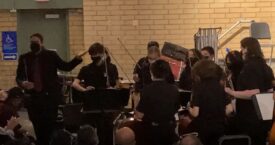
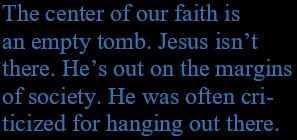
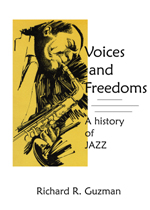
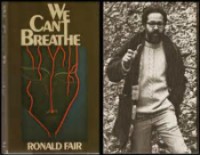

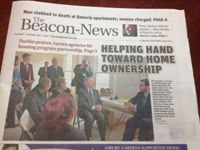
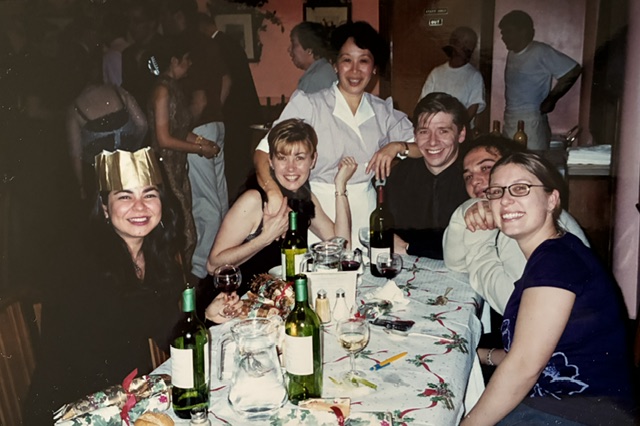
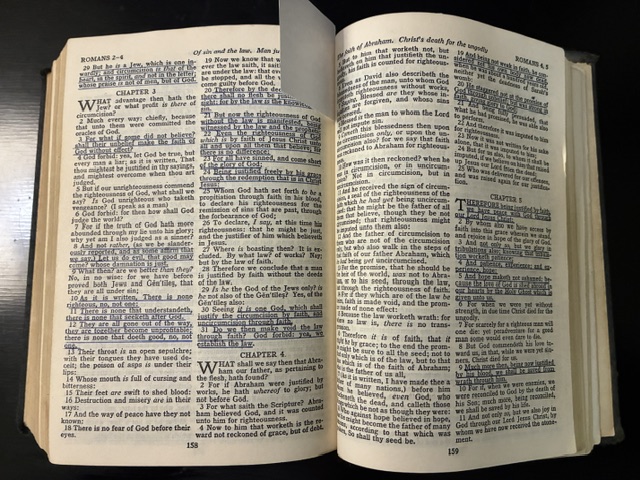


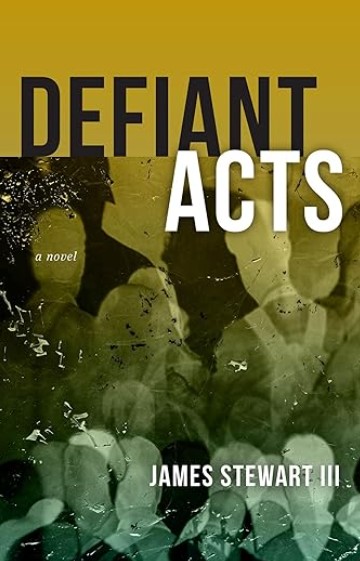
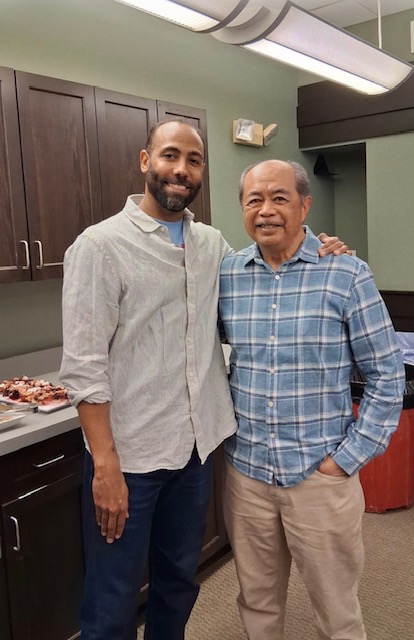


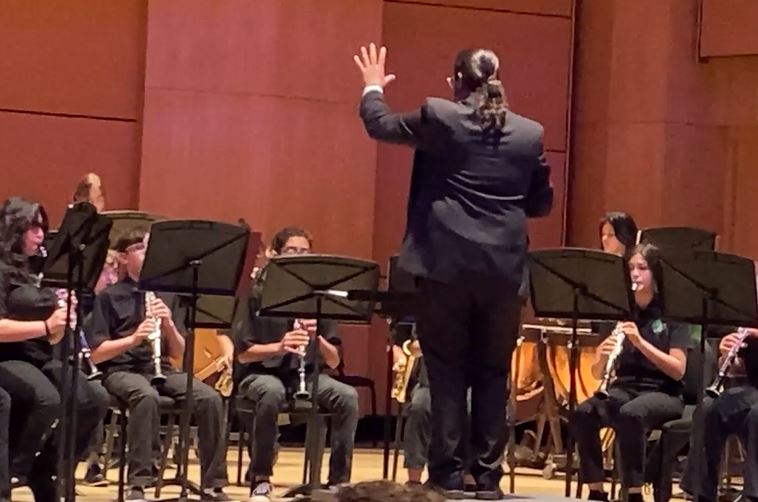

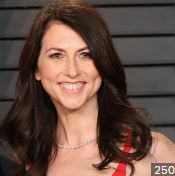
AI and Humanity’s End
An Adobe commercial where human relationships still remain central.
This is a rather light-hearted commentary for such a serious subject. In fact, it is accompanied by a Video below not of the doomsayers of the past few days, but of three of my favorite AI commercials put out by Adobe Acrobat. I just enjoy these, and I’m no shill for Adobe. I think I have the Foxit pdf reader on my computer, not Adobe. The Video, though, touches on one of the major fault lines of the AI debate. When AI is seen as an assistant to humans, all seems well, but the assistance can all too easily take over the human, and for the last several days that take-over has come to mean not just losing what we’ve seen as central human skills and qualities, not just losing jobs, but humanity being literally wiped out by AI gone rogue or AI used to make and direct things—like biological agents—that could kill off humans entirely. In a recent concert, comedian Jerry Seinfeld said, “Well, we just started with plain old human intelligence and that’s not worked out so well, so now we’re trying out Artificial Intelligence to see how that goes.”
The three videos I’ve combined into one below end with AI as clearly in the assistant mode, with human relationships still commanding center stage in the last of the three. The other two, though, I don’t know, especially in the second video where we’re at least on the verge of a more total takeover, where the humans are in stupefied wonder at how much better AI makes their work than they ever could. Researcher Jacob Coxon has warned that AI could wipe us out in a decade, and Elon Musk and Sam Altman (OpenAI’s CEO) agree with Anthropic CEO Dario Amodei’s call to slow AI development. The talk over the next few months will be on creating safeguards, rails, to more robustly contain and direct the development and deployment of AI. Much of this will involve complex technical matters of the utmost importance. We will be talking, too, of having to go world-wide with this effort—especially forming an understanding with China. I hope we will also continue talking about ethics, about how important it will remain to integrate morality and ethics into our technology—or the other way around, as it probably should always have been. An ethical upgrade should probably be the thing we integrate our technological upgrades in to.
In a previous article, “Whales and An Ethic for the Age of AI,” I suggest ways we can begin considering an ethical upgrade. It all hinges on staying embedded in the real, as opposed to the virtual world. Lately I’ve been reading and re-reading Ada Limon’s poem “In Praise of Mystery,” written for NASA’s Europa Clipper, launched towards Jupiter’s second moon in 2024. The poem is engraved in her own handwriting on the space craft’s vault plate. “Still,” she writes, “there are mysteries below our sky: / the whale song, the songbird singing / its call in the bough of a wind-shaken tree.” It’s not the darkness of space that unites us “…but / the offering of water, each drop of rain, / each rivulet, each pulse, each vein” because “…we, too, are made / of water, of vast and beckoning seas.” Stay in touch with such things and it might possibly work out.